The road from a sales slump to a triumphant rise requires not just resiliency but also the strategic skill to go from point A to point B in the ever-changing world of business, where the tides of fortune may alter in an instant. The book “From Slump to Surge: Harnessing Growth Marketing Strategies for Sales Resurgence” is an investigation into the art and science of reviving sales through the transformative force of growth marketing. The book is titled “From Slump to Surge: Harnessing Growth Marketing Strategies for Sales Resurgence.” This excursion goes deep into the armoury of inventive strategies that drive businesses from stagnation to success as we negotiate the ever-evolving terrain of customer behaviour and market trends.
Harnessing Growth Marketing!
We will examine the complexities of growth marketing, which combines imaginative thinking and data-driven decision-making. At every turn of the page, you will discover fresh tactics that have the ability to give even the most sluggish sales statistics a new lease on life. These ideas cover everything from reinventing customer engagement to increasing brand resonance.
As we dig up examples of actual successes in the real world and analyze the processes that led to those successes, a road map is beginning to take shape. This road map encourages companies of all sizes to tap into the full potential of growth-focused campaigns.
Join us on this transformational trip, a voyage that goes beyond the conventional knowledge of marketing and embraces the daring to break conventions. “From Slump to Surge” isn’t simply a handbook; it’s an inspirational manifesto for those who dare to rekindle the spark of sales, to question the status quo, and to choreograph a rebound that leaves an everlasting impression on the corporate landscape. “
From Slump to Surge” is available on Amazon.com. Therefore, fasten your seatbelts and get ready to learn the tips that may transform obstacles into opportunities, setbacks into comebacks, and slumps into thunderous surges of successful accomplishment.
The fusion of imagination and data in growth marketing!
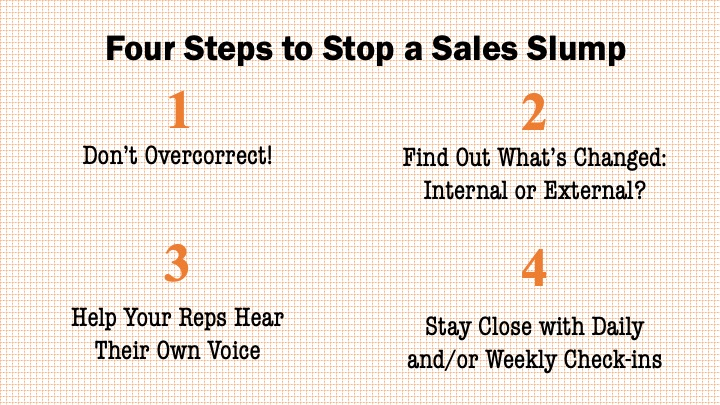
Here are four critical steps to help a struggling salesperson recover from a slump:
- Don’t overcorrect
- Find out what’s changed
- Help them hear their own voice
- Stay close
Getting out of a downturn in sales requires an approach that is both strategic and comprehensive. To begin, it is vital to conduct an in-depth investigation into the underlying causes of the downturn. These factors might include altering market trends, pressure from competitors, or internal concerns.
This information guides the targeted modifications to product offers, prices, and messages that are made as a result. It is possible to rekindle ties by re-establishing contact with previous customers through tailored communication. In addition, expanding the client base may be accomplished by using new growth marketing strategies such as content-driven marketing campaigns and active participation in social media.
Adapting to digital platforms and engaging in e-commerce enables businesses to enter new markets and meet the changing demands of customers. Collaboration between the sales and marketing departments may ensure the cohesiveness of efforts. The combination of sales training and motivation may instill a revitalized sense of desire in salespeople.
Last but not least, building a culture of continual development and flexibility empowers an organization to manage future obstacles in a resilient manner. In its most basic form, overcoming a sales slump requires a combination of analysis, adaptability, creativity, and cooperation in order to move the company toward fresh development.
How do you drive sales performance?
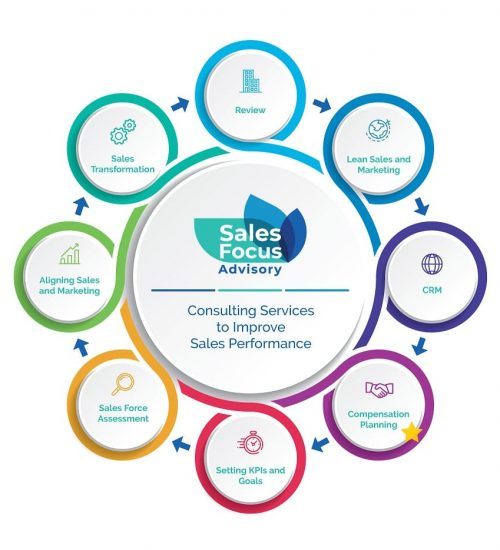
Let us assist you in shaping your sales compensation and sales incentive plans to:
- Improve top-line growth
- Reduce the cost of sales
- Improve team performance
- Accelerate growth and increase company valuation
To effectively drive sales success, one needs to use a comprehensive strategy that integrates strategic planning, efficient execution, and ongoing improvement. To get started, begin by establishing sales targets that are crystal clear, attainable, and in line with the larger corporate objectives. Gain a thorough grasp of your intended audience, and then modify your value offer so that it perfectly addresses the requirements of that audience.
Provide your sales staff with in-depth training that teaches them about the products you sell, how to deal with customers who raise objections, and how to communicate effectively. Utilize data-driven tactics to keep track of client contacts, evaluate patterns, and locate chances for upselling or cross-selling products or services.
Utilize various types of technology, including customer relationship management (CRM) systems and sales analytics tools, in order to simplify and speed up procedures. Maintaining a consistent evaluation of performance measures and offering constructive criticism can help optimize strategy. In order to boost morale and encourage healthy competition among the sales team members, you should establish a culture that places a strong emphasis on motivation and recognition.
In addition, when sales and marketing teams work together, they can guarantee that their messaging is consistent and that they engage their customers. Maintaining a state of flexibility and adaptability in reaction to changes in the market and receiving feedback ensures a steady progression toward improved sales performance.
The process of developing a plan for increasing sales requires the creation of a well-defined road map that includes an understanding of the market, the establishment of goals, and the implementation of strategies. To get started, you should begin by doing a thorough market study to determine trends, client preferences, and the dynamics of competition. Establish SMART goals—goals that are precise, measurable, attainable, relevant, and time-bound—that are linked with the objectives of your organization.

Your value offer should be tailored to each subgroup’s specific requirements, and you should segment your target audience accordingly. Utilize data to determine which leads have high potential and rank them in order of priority for targeted communication. To reach the widest possible audience, you should use a multi-channel strategy that integrates traditional approaches with internet platforms and social media.
Streamline your procedures and improve the effectiveness of your team by making an investment in sales enablement tools and technology. Develop key alliances with companies whose products or services are complementary to your own in order to broaden your market reach. You should routinely evaluate your strategy and make adjustments to it based on performance data and input from customers.
It is essential that your sales personnel get ongoing training and improve their skills. Last but not least, in order to remain sensitive to shifting market conditions and ever-evolving client demands, cultivate a culture of innovation and flexibility.
How do you create a sales strategy from scratch?
A methodical approach is required in order to construct a sales plan from the ground up. Your first step should be to identify your target market and gain an awareness of the challenges they face, the preferences they hold, and the purchasing patterns they engage in. Create a crystal-clear value proposition that solves these demands in a way that is completely unique.
Establish sales targets that are definite, quantifiable, and in line with the overall goals of your company. Conduct research on your rivals and think about what makes you stand out from the crowd. It is important to select the appropriate sales channels in light of the routines and preferences of your target audience. These channels might include internet platforms, direct sales, or partnerships.
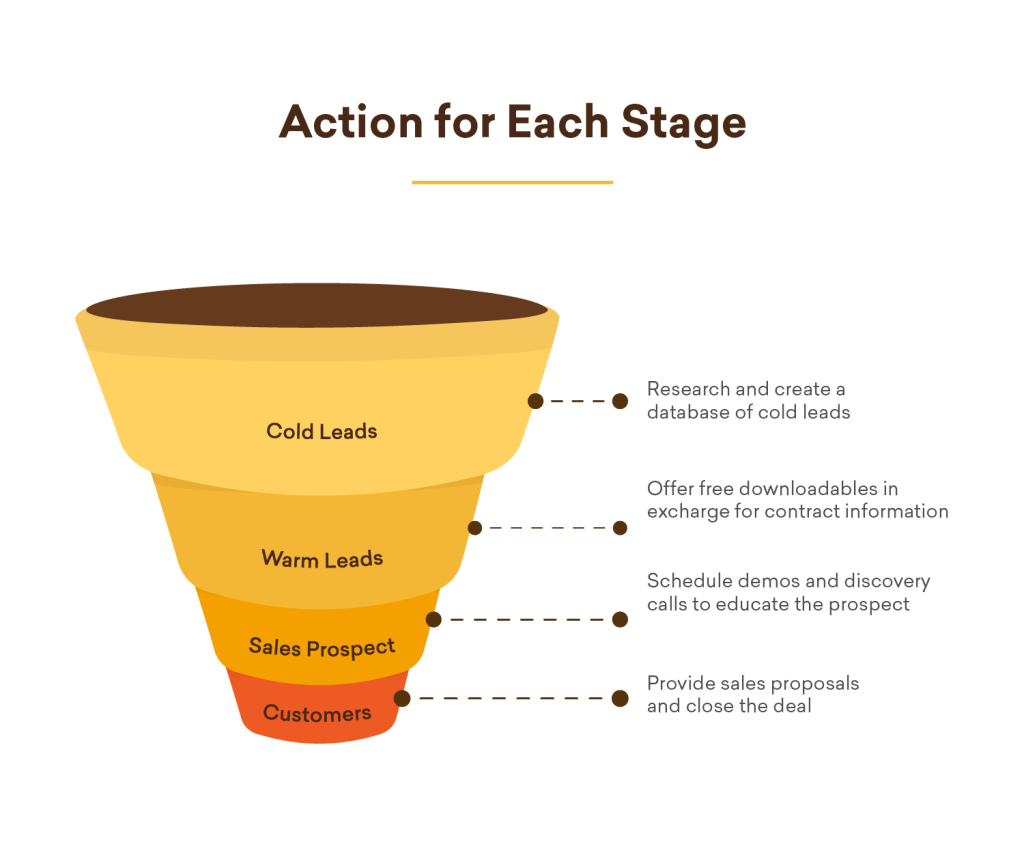
Outline your sales process, including the production of leads, the nurturing of those leads, the closure of the sale, and the post-sale care of your customers. Develop a pricing plan that represents the value you deliver to customers and takes into account the dynamics of the market. Create a detailed sales strategy that takes into account strategies, timetables, and the team members accountable for implementing it.
Utilize technology to create effective customer relationship management (CRM), analytics, and communication solutions. You should provide your sales personnel with training and empowerment in product knowledge, resolving objections, and negotiating abilities. Reviewing and modifying your plan on a regular basis based on performance data and input from the market can help assure continual growth.
What are the key elements of a successful sales strategy?

A winning sales plan will incorporate a number of essential components that collaborate in an effective manner to propel expansion. First and foremost, it is essential to have a comprehensive awareness of the target market as well as the requirements of the customers. Using this understanding, one may create a compelling value proposition that is specifically designed to fulfill their demands in their own unique way.
In order to offer direction and purpose, setting sales targets that are clearly defined in terms of revenue as well as other important indicators is essential. A sales process that is well-structured, from the production of leads to the follow-up that occurs after a sale, promotes consistency and efficiency. An efficient allocation of resources may be achieved through the use of segmentation and targeting techniques.
Customer perception may be improved through the use of strategic pricing that takes into account both value and competitive positioning. Reach may be expanded by utilizing a variety of sales channels, including direct sales, internet platforms, and partnership arrangements. Continuous examination of performance data and feedback from customers makes it possible to make changes and enhancements at the appropriate moment.
The sales staff is equipped with the know-how and resources necessary for success as a result of investments made in sales training and equipment. When the sales and marketing teams work together, they can guarantee that their messaging is consistent and that their brand is aligned. Adaptability to shifting market conditions and a relentless concentration on delivering exceptional service to clients are the lasting ingredients necessary for long-term success.
What are the four basic elements of a sales strategy?
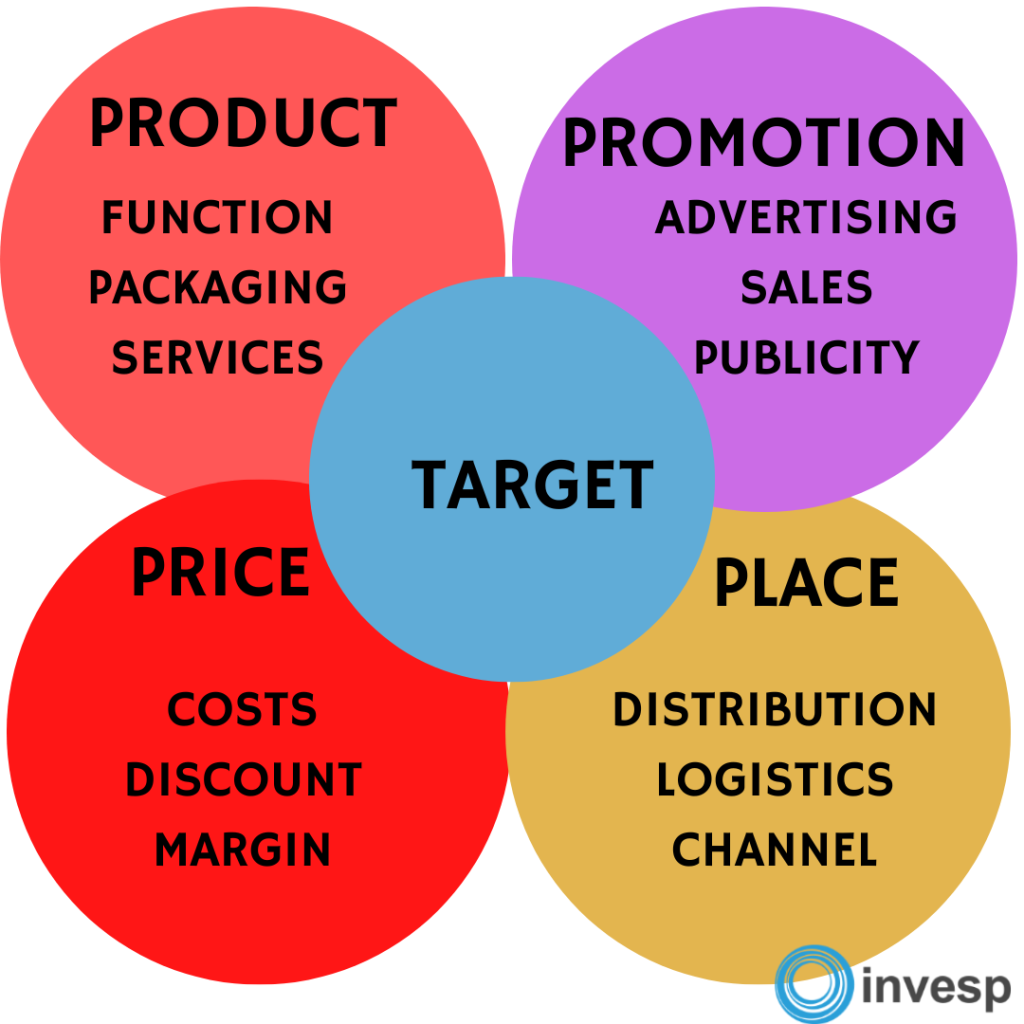
The most important factors in determining whether or not a sales process is successful are the customer, the value proposition being presented, and the sales process itself. Professional tip: something else you can do during the product stage of the 4Ps is to study what’s available on the market so you can see the products your target audience is used to and features they’ll like to see, and you can develop them in your product.
When it comes to deciding whether or not an attempt at sales will be successful, the customer is the single most crucial aspect. It is essential to have a comprehensive awareness of their requirements, preferences, pain areas, and purchase habits in order to successfully interact with them and develop meaningful connections with them. If you personalize your approach to connect with the specific context of the consumer’s circumstances, you may boost the likelihood of making a sale and maintaining a long-term relationship with a customer.
Value Proposition: A convincing value proposition articulates the one-of-a-kind advantages and solutions that your product or service offers to meet the issues or ambitions of the target consumer. This allows your product or service to stand out from the competition. It describes the value that customers might anticipate obtaining from a purchase, and it differentiates your product from that of your competitors. It is vital to build a value proposition that is different and convincing in order to capture the attention of clients and inspire them to make a purchase. This may be accomplished by creating a value proposition that is unique.
The voyage from the initial contact to the finalization of the contract is what constitutes the sales process. An organized and effective sales procedure is in charge of this journey. It includes activities such as the generation of leads, the qualification of those leads, the assessment of requirements, the presentation, the handling of objections, negotiation, and the finalization of a deal. A well-structured process ensures consistency, cuts down on the number of errors that occur, and results in higher conversion rates. One way to further enhance the sales experience is to modify the process so that it corresponds with the customer’s path.
When brought into harmonious harmony, these components form a foundation for successful sales by placing the requirements of the client first, successfully conveying the value of the product or service being sold, and expertly navigating the sales journey. This foundation for successful sales is built by putting the customer in the driver’s seat. Combining these elements creates a cohesive sales strategy that maximizes relevance, impact, and competitiveness in the market.
What are the three most important components of sales?
The customer, the value offer, and the sales process are the three aspects of the sales process that are most critical to its success.
The client is the most important factor in determining whether or not a sales attempt will be successful. It is crucial for successful engagement and the establishment of meaningful connections to have a thorough understanding of their requirements, preferences, pain areas, and purchasing patterns. You may increase the chance of a conversion and long-term devotion to a client by tailoring your approach to resonate with the unique context of the consumer’s situation.
Value Proposition: A persuasive value proposition articulates the one-of-a-kind benefits and solutions that your product or service delivers to solve the difficulties or aspirations of the target consumer. It conveys the value that buyers might anticipate receiving and distinguishes your product from that of your rivals. To attract customers’ attention and encourage them to make a purchase, it is essential to develop a value proposition that is both distinct and persuasive.
An organized and efficient sales procedure serves as the road map for the sales process, which runs from the initial contact to the signing of the contract. It entails the development of leads, the qualification of those leads, the evaluation of needs, the presentation, the management of objections, negotiation, and closing. A well-structured process promotes consistency, reduces the number of errors that occur, and increases conversion rates. The sales experience may be improved even further by modifying the process so that it corresponds with the buyer’s journey.
When brought into harmonious alignment, these components build a foundation for successful sales by putting the requirements of the customer first, successfully articulating the value of the product or service being offered, and deftly navigating the sales journey.
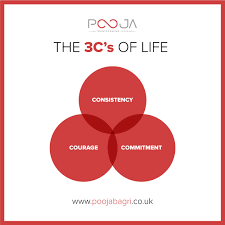
Consistency, commitment, and courage are the key elements that allow you to keep your commitments, not just to others but to yourself as well.
Stay consistent and committed!
In Conclusion!
The route to sales excellence requires a strategic combination of creative thinking, customer-centric insights, and persistent attention to being data-driven. Understanding, adaptation, and invention are the hallmarks of a successful trip, which is characterized by negotiating difficult slumps and organizing victorious surges. For a sales plan to be effective, the market must first be meticulously segmented, then precisely targeted, then compellingly positioned, and finally clearly differentiated.
However, these components discover their actual meaning when they are focused on the client, who is the beating heart of every sales activity. The key to success is to recognize the customer’s requirements, provide an unrivaled value offer, and do it within the context of a logical and organized sales procedure. In an environment that is defined by perpetual change, a dedication to continuous development, collaborative cooperation, and exploiting cutting-edge technology emerges as the core of successful business practices. As we say our goodbyes, it is important to keep in mind that the art of sales is not simply about making transactions; rather, it is about creating connections that endure a lifetime and leave behind a legacy of happiness, loyalty, and expansion.