
If you want to improve your chances of becoming wealthy, you need to release these nine bad habits. Majority of individuals in every region of the world harbor the hope that one day they will become wealthy. In fact, it probably wouldn’t be too much of a stretch to argue that this is the primary motivator for the majority of the things that we do. After all, don’t you fantasize about living a life where you’re not just in a position to pay your bills? Your expenses? Where do you also have a lot of spare money to spend on pleasurable things like traveling, relaxing, and living luxuriously?
| Table Of Contents |
| Why do people feel this goal is out of reach and unattainable? |
| Living above your financial means! |
| Failing to make any effort to preserve! |
| Being happy with relying on a single source of revenue! |
| Consider starting a secondary business! |
| Giving in to the temptation of getting wealthy quick schemes! |
| Only associating with others who hold the same beliefs as oneself! |
| A lack of regard for financial education! |
| In Conclusion! |
Why do people feel this goal is out of reach and unattainable?

It is common for a confluence of psychological, social, and economic elements to be the source of an individual’s feeling that the objective of achieving financial wealth is unachievable. In the first place, creating inaccurate comparisons to wealthy people or to the expectations of society can produce feelings of inadequacy, which in turn makes the objective appear further away.
Moreover, economic gaps and structural inequities can make upward mobility difficult, particularly for individuals who have limited access to education, work prospects, and financial resources. This is especially the case in countries where there are large economic disparities. In addition, people may be discouraged from even attempting to earn money due to the fear of failing or a lack of knowledge regarding financial matters. A history of financial difficulties or other unfavorable circumstances may contribute to a defeatist mindset.
The presentation in the media of stories about people who became successful “overnight” can likewise generate excessive expectations, further separating the target from reality. A complete strategy, including financial education, mental fortitude, and social measures to alleviate inequality, is required in order to address these misconceptions.
Individuals may be empowered to overcome the idea that their financial goals are unattainable by realizing that the accumulation of money is a process that takes time, setting milestones that are within their control, and working in an atmosphere that is encouraging. It is easy to imagine that only a select group of people can ever amass significant wealth. But do you know what? It is not necessary to have an inventive mind like that. It’s not so much about having certain skills as it is about having the correct mentality, perseverance, and habits. This requires breaking certain bad habits that are getting in the way of progress.
Living above your financial means!

A damaging behaviour that can lead to a cycle of debt and obstruct your road towards financial stability is spending more than you make, which exceeds your financial capabilities. Spending less than you make is a way to avoid this. This pattern of conduct frequently entails the accumulation of obligations that are not essential, an excessive reliance on credit, and a failure to save or invest for the future. Living above one’s means can inhibit the growth of money, reduce one’s capacity to exploit chances, and produce unnecessary worry.
To establish a secure financial foundation and the possibility for ultimate prosperity, it is essential to cultivate responsible spending habits, create an efficient budget, and place a priority on saving and investing money. Only then can one hope to build a wealthy future. So, I’ll begin with the most fundamental piece of financial advice there is: don’t spend more than you earn. Many of the individuals I know go beyond their financial means and purchase items that are far more expensive than they are able to pay for.
Clothes.
Purses made by a designer brand
A flashy automobile.
Yet, due to the fact that they are unable to pay off their credit card balance in full each month, their monthly payment continues to increase. Before they realize it, they have racked up a mountain of debt and are forced to seek assistance from debt consolidation specialists. When it comes to one’s financial situation, it is always to one’s advantage to create a lifestyle that is thrifty.
I don’t intend to imply that you should deprive yourself of everything that makes life enjoyable, but there is a need for balance, and you should make decisions that are in your best interests. Personally, I enjoy browsing around secondhand stores and hunting for offers online. Not only do I receive options that are better for my money, but there’s also the excitement of discovering things that I wasn’t expecting to uncover.
Failing to make any effort to preserve!
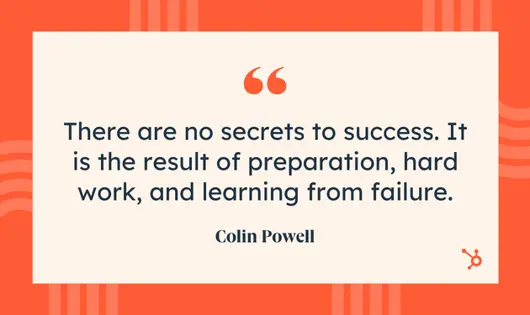
It should come as no surprise that this is the result of living above one’s means because there is nothing left to save once everything has been spent. Yet even if you don’t spend more than you earn, it’s possible that you’ll put off saving money for the future. When I was younger, I was just like that. I have no memory of changing. I didn’t put aside any of the additional money I had; rather, I spent it on going out to eat or buying pricey presents for the individuals I cared about the most.
When you’re young, I believe you just naturally have the mindset that you have a lot of time to put money away. As I reached my 30s, though, I finally came to terms with the notion that time is not infinite. Every day that I don’t put something aside is time that I’ll never get back, and the days go by. Don’t put off saving because of this. It doesn’t have to be a great amount; even if all you can manage to save is a few dollars here and there, it will still help you get in the appropriate frame of mind regarding how to handle money. You may be wondering what will happen if there is practically no money left over after all of my payments have been made. Then, the next section, which may be of assistance.
Being happy with relying on a single source of revenue!
Being content with relying on just one source of income might be confining in a world that is always shifting and changing. Individuals expose themselves to higher financial vulnerability when they rely on a single source of money because unexpected situations have the potential to undermine financial stability. Income may be diversified in a number of ways, including the use of side businesses, investments, or numerous employment streams. Doing so can provide a safety net, improve financial stability, and open up prospects for expansion. Using this preventative strategy not only helps protect but can also start possible setbacks. It also encourages adaptation, the development of skills, and a more comprehensive awareness of different economic landscapes.
Do you recall the ancient adage that cautioned against putting all eggs in one basket. It is the precise way that we ought to think about money. It’s possible that your employment won’t change much. It’s possible that your wage is substantial enough for you to meet all of your monthly expenses and still have some money left over for savings. So let’s face the facts: What if you fall sick all of a sudden? Or were you fired? You won’t get very far with the money you’ve managed to save. Why, then, limit yourself to a single paycheck? There are so many different ways to earn money in today’s gig economy that it might be difficult to choose just one.
Consider starting a secondary business!

It’s possible that the artwork you create in your spare time or the expertise you have in customizing autos may bring in some extra cash. I can’t stress the importance of this enough: you need to earn passive income. This has proven to be one of the most beneficial experiences of my life, and as a result, I now have many revenue sources without having to put in as much effort. The following are some potential sources of passive income for you to consider:
Investing in properties of real estate, o Stocks that pay dividends, o Proceeds from the sale of creative and intellectual property, including royalties, Leasing of vehicles and/or properties.
In spite of this, if you want to make the most of all these financial changes, you are going to require one more quality: bravery. Being unable to overcome a fear of taking chances. Fear’s paralyzing effects are especially evident when it comes to financial matters. After all, it’s not too unlike gambling in that you’re risking the money you’ve worked so hard to get on something brand new. Which you don’t know if it will be a success or a mistake since you don’t know how it will turn out. Yet, as the old adage goes, there’s not much payoff. Let me restate that: there is limited opportunity for gain in the absence of planned risk.
Thus, what steps can you take to conquer that fear?
To begin, you have the option to:
Be sure to do careful and extensive research.
If you want greater certainty, you should speak with a financial advisor.
Choose assets with a low level of risk.
Giving in to the temptation of getting wealthy quick schemes!

The one that is tough long, and arduous. As a result, their success reached levels that others could only dream of. Success is a slow climb, but the view from the top is worth it. If you are constantly looking for ways to fast-track the process, you will never make it.
When we talk about dangerous investments, one thing that you should certainly avoid at all costs are programs that promise instant wealth. I can relate to the desire to give in. Who wouldn’t want to put their money into something that requires only a small initial outlay but has the potential for enormous returns? If this is something that you have a history of doing, it would be wise to keep in mind the various warning tales. It’s hard to resist the allure of quick cash, but unfortunately, most of the time it only leads to a trap. Building money is a slow and patient process, which every billionaire will tell you is necessary.
One Day at a Time is yet another frame of mind that I advocate for and practice myself.
In point of fact, giving in to impulses is what leads people to invest in schemes that promise instant wealth. Because of this, any attempt at rationality is completely pointless. So leaving it to the side, have a look. Are you the kind of person who finds comfort in shopping as a form of self-care? When I’m in a bad mood, I treat myself to a meal at a nice (and most of the time pricey) restaurant. Yet often, I operated under the assumption that “I deserve this!” I mean, there’s really nothing wrong with indulging in a treat and picking up your mood every once in a while.
Every once in a while, we do merit things like that. But, if you chase transitory highs too often, you may also be unknowingly choosing financial lows as a result of this behaviour. These days, I try to practice more mindfulness. I am now aware of the situations that set off my emotional responses, and I have developed coping mechanisms that do not involve spending excessively. I strongly suggest that you follow my lead. You can definitely allow yourself a treat once in a while, but you should also look for other methods to feel better without reaching for your wallet.
Only associating with others who hold the same beliefs as oneself!

Where do we stand in regard to your social circle? Are they responsible with their money, or do they tend to blow it all the time?
They are more important than you give them credit for. It’s common knowledge that the people we spend the most time with have a significant impact on who we are, even if we don’t always recognize it. Perhaps you have a colleague who always brings their morning coffee from Starbucks with them to the office. Perhaps you have a buddy who is a shopaholic and is constantly pressuring you to buy new things. It is my recommendation that you seek out the company of people who have a different approach to managing their money. Particularly those who have been successful in accomplishing their objectives and the stories of their accomplishments, if you will.
To be clear, I’m not saying that you become someone who seeks to advance their social standing or who is always looking for new opportunities. It is nothing but sloppy. To clarify, what I mean is to forge organic and real connections with other people out of a desire to learn and develop as a person while also providing something of equal worth to the other person. Discover answers that go beyond your current financial situation.
A lack of regard for financial education!
The fear of taking chances, emotional spending, and other behaviour’s that impede you from accumulating money have all been discussed so far in this article. In addition to all of that, you need to improve your knowledge of financial matters.
“The capacity to comprehend and efficiently employ numerous financial abilities, including personal financial management, budgeting, and investing,” according to one definition of financial literacy. It is important that we are able to “read” money in the same way that we are able to read books. So let’s face it: the stock market can be a nerve-wracking experience.
And how are you supposed to make sound financial decisions if you don’t even comprehend the basics? Thus, get as much as you possibly can. Reading books, listening to podcasts, and enrolling in online financial literacy classes are all great ways to increase your knowledge of various financial concepts and how money functions in general.
That way, you’ll be able to.
Get a solid grasp of the operation of compound interest.
Decipher the meaning of all of the different rates and fees that appear on your credit card statement.
Be knowledgeable about the various tax classifications.
Be aware of many cons and frauds involving money
And you won’t feel like your eyes are about to glaze over whenever you hear someone talking about business.
Inability to see the big picture!

At last, we’ll take a look at the bigger picture. Do you have it with you? It’s fantastic to have huge dreams, but do you also have specific financial objectives and a well-defined strategy for achieving them. Let’s take another look at who exemplifies the phrase “sound, slow, and steady” to its fullest extent. Did he immediately run out and purchase a flashy automobile or a palatial home the moment he made his first million? Nope.
He put his initial million dollars into shares, which ultimately gave him an additional million dollars in profits. He continued to repeat that process until he arrived at the point where he is now. This demonstrates how consistent and methodical he has always been in his pursuit of his objectives. You could think of him as a unicorn, but the truth is that with the right mindset and some basic financial knowledge, you too can amass money and success.
Conclusion!
In conclusion, if you want to be financially successful, you need to make a conscious effort to break free of certain tendencies that might slow down your advancement. Conquering the mentality of living above one’s means as well as the conviction that riches are unachievable is the first step in establishing a solid foundation for a prosperous path toward monetary security.
Understanding the significance of different revenue sources and embracing diversification are two important ways to emphasize the necessity of adaptation in an economic landscape that is always shifting. Individuals are able to allocate resources toward savings, investments, and possibilities for advancement after they break free from the chains of spending above their means and take control of their financial situation. Cultivating a mentality that is more realistic, supported by financial knowledge, resilience, and societal support to overcome economic inequities, is one way to address the feeling that goals are unattainable.
In the end, embracing these transformational activities not only improves one’s chances of amassing money but also encourages the development of a more comprehensive awareness of one’s financial health. In order to pave the way for a future that is characterized by financial security, adaptability, and the possibility of long-term success, one must make the deliberate decision to abstain from behaviours’ that obstruct the path to advancement.