Navigating the shifting landscape of the 21st century requires you to harness specific high-income skills worth learning, leading to personal growth, extensive career prospects, the ability to build your own business, and remarkable earning potential. These skills could be your secret key to unlocking a high income. Identifying and developing high-demand competencies across various categories is crucial in the new, highly competitive world. The strategic art of business development: these skills offer the perfect blend of high demand by employers, income potential, and entrepreneurial possibilities. So, let’s dive in and discover these powerful capabilities and how you can leverage them to supercharge your career.
The Digital Marketing Landscape: Channels, Platforms, and Trends!

In this digital age, the ability to effectively market products and services online can be a gold mine. If you master digital marketing, there are numerous prospects for creating your own high-income business. You could set up a digital marketing agency providing solutions to clients or perhaps a consultancy helping businesses optimize their online presence and marketing efforts. As consumer habits and technologies evolve, a knack for staying ahead of digital marketing trends can lead to sustained business success. Digital marketing is a high-demand skill set in the age of online sales that allows advertisers to quantify their advertising budgets and efficiency in sales.Here are some areas of digital marketing that are particularly lucrative.
Search Engine Optimization (SEO) Techniques for Improved Search Rankings!
Learning how to optimize websites and content for search engines is crucial for businesses that want to rank higher in search results and attract organic traffic. Companies looking to increase their online visibility are highly interested in SEO specialists. Search Engine Optimization (SEO) is a digital marketing strategy aimed at improving a website’s visibility and organic traffic in search engine results.
By understanding and implementing SEO best practices, businesses can enhance their online presence. Attracting more relevant visitors and ultimately increasing their potential for conversions and revenue. SEO involves various on-page and off-page techniques, including keyword research, content optimization, link building, and technical improvements to enhance a website’s search engine friendliness.
Successful SEO strategies aim to align with search engine algorithms and user intent, providing valuable and relevant content to users. Regular monitoring, analysis, and adjustments are essential to stay ahead of the competition and maintain high rankings in search engine results pages (SERPs). Overall, SEO plays a critical role in helping businesses gain a competitive edge in the digital landscape and reach their target audience effectively.
Crafting Effective PPC Ad Campaigns: Best Practices and Tips!
Understanding how to set up and manage effective PPC campaigns on platforms like Google Ads and Facebook Ads can drive significant results for businesses. Skilful PPC specialists can help companies maximize their advertising budgets and achieve a better ROI.
Pay-per-click (PPC) advertising is a digital marketing model in which advertisers pay a fee each time one of their ads is clicked. It is a method of buying traffic to a website rather than earning it organically through search engine optimization (SEO) or other means. PPC ads are typically displayed on search engine results pages (such as Google Ads) or on various online platforms like social media networks and websites.
Key aspects of PPC advertising:
- Keyword Targeting: Advertisers select relevant keywords and bid on them, determining how much they are willing to pay for each click on their ad. When a user searches for those keywords, the ad may be displayed, and the advertiser pays only when the ad is clicked.
- Ad Auctions: In search engine PPC platforms, ads are placed through auctions where advertisers compete for ad placements based on keyword bids and ad relevance. The search engine’s algorithm considers factors like bid amount and ad quality score to determine the ad’s position on the results page.
- Ad Creatives: Effective ad creatives are essential to attract clicks and drive conversions. Advertisers need to craft compelling headlines, engage ad copy, and include relevant ad extensions (e.g., site links, callouts) to entice users to click on their ads.
- Landing Pages: To ensure a positive user experience and higher conversion rates, PPC ads should lead users to relevant and well-designed landing pages. These pages should align with the ad’s message and provide the information users are seeking.
- Budget Management: Advertisers set daily or monthly budgets to control their PPC spending. Once the budget is exhausted, the ads stop running until the next budget cycle.
- Targeting Options: PPC platforms offer various targeting options, such as geographic targeting, demographic targeting, device targeting, and interest-based targeting, allowing advertisers to reach their desired audience effectively.
- Performance Tracking and Optimization: PPC campaigns require continuous monitoring and optimization. Advertisers analyze performance metrics like click-through rates (CTR), conversion rates, and return on ad spend (ROAS) to refine their strategies and improve campaign effectiveness.
PPC advertising offers businesses an opportunity to reach their target audience directly, and it can deliver immediate results compared to traditional methods like SEO. However, it requires careful planning, keyword research, and ongoing management to maximize return on investment (ROI) and achieve campaign objectives successfully.
Leveraging Social Media Platforms and Strategies for Effective Branding!
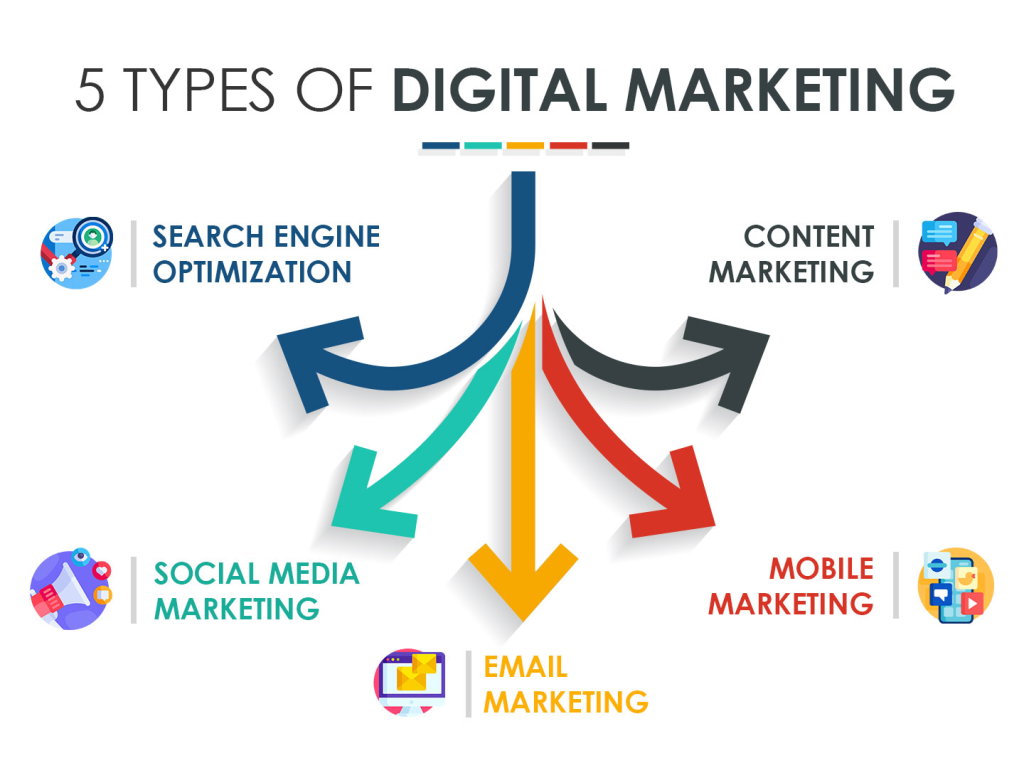
Social media platforms have become essential for businesses to connect with their audience. Being proficient in social media marketing and advertising can help companies build brand awareness, engage with customers, and drive sales.
Social media marketing (SMM) is a digital marketing strategy that utilizes social media platforms to promote brands, products, or services and engage with target audiences. SMM involves creating and sharing compelling content, such as posts, images, videos, and stories, across various social media channels like Facebook, Instagram, Twitter, LinkedIn, and others.
The primary goals of social media marketing are to increase brand awareness, align with customer engagement and loyalty, drive website traffic, and ultimately generate leads and conversions. Businesses leverage social media analytics and insights to understand their audience’s preferences, behaviors, and sentiments, enabling them to tailor content and communication for maximum impact. By harnessing the power of social media platforms, companies can establish a direct and interactive relationship with their customers, driving business growth and building a positive brand reputation in the digital space.
Creating Content and Techniques with Valuable Marketing Material!
Creating valuable and relevant content that attracts and retains an audience is vital for digital success. Content marketing encompasses blogging, video marketing, email marketing, and more.
Content Marketing is a strategic marketing approach that focuses on creating valuable, relevant, and consistent content to attract and engage a specific target audience. The goal of content marketing is to build trust, establish authority, and nurture relationships with potential customers, ultimately leading to profitable customer action.
Content marketing involves various forms of content, such as blog posts, articles, videos, infographics, podcasts, and more. The content is tailored to address the needs, interests, and pain points of the target audience, providing them with valuable information, entertainment, or solutions to their problems.
By consistently delivering high-quality content, businesses can position themselves as thought leaders in their industry, attract organic traffic, and encourage social sharing and word-of-mouth marketing. Content marketing is an integral part of the customer journey, helping prospects move through the sales funnel, from awareness to consideration and finally, to conversion and brand loyalty.
Building an Effective Email Marketing Strategy!
Knowing how to craft compelling email campaigns and manage subscriber lists can lead to strong customer engagement and higher conversion rates.
Email Marketing is a digital marketing strategy that involves using email to communicate with potential and existing customers. It is a powerful tool for businesses to build relationships, nurture leads, and drive conversions. Email marketing campaigns can be used to deliver a variety of content, such as newsletters, promotional offers, product updates, event invitations, and personalized recommendations.
The key to successful email marketing lies in creating relevant and engaging content that resonates with the recipients. Email segmentation allows businesses to target specific groups of subscribers with tailored messages, increasing the likelihood of response and conversion. Additionally, email automation enables marketers to send timely and triggered emails based on user actions, optimizing the customer journey and saving time.
Effective email marketing can drive traffic to websites, boost sales, and attracting brand loyalty, making it an essential component of any comprehensive digital marketing strategy. However, it is crucial to adhere to email marketing best practices, such as obtaining consent, providing easy opt-out options, and ensuring compliance with anti-spam laws to maintain a positive reputation and deliverability rates.
Essential Tools and Techniques in Data Analytics!

Data analytics is the study of large data sets with the goal of identifying useful information such as trends, patterns, and insights.
Data mining is the process of gaining insight from raw data through the application of statistical and mathematical methods and the use of data visualization tools.
Decisions, processes, and competitive advantages are all improved with the help of data analytics, which is used across many sectors. Collecting, cleaning, exploring, modelling, and interpreting data are all part of the data analysis process.
Data analytics is used by businesses and organizations to gain insight into customer behaviour, enhance existing offerings, optimize marketing efforts, predict future demand, and boost overall performance.
Professionals in fields as diverse as marketing, finance, healthcare, ecommerce, and more now need to have a firm grasp of data analytics to succeed. In doing so, it helps businesses increase productivity, cut costs, and make more informed decisions.
Businesses can benefit from learning to collect, analyze, and interpret data from their digital marketing campaigns by optimizing their strategies and making data-driven decisions.
Increasing Your Website’s Conversion Rate, Analyzing User Behaviour!
Conversion rate optimization (CRO) is the process of optimizing a website so that more visitors convert into paying customers. Professional CROs have the potential to have a major financial impact on a business.
A website’s conversion rate refers to how many visitors actually complete the site’s desired action, such as making a purchase, subscribing to a newsletter, or completing a form. Conversion rate optimization (CRO) works to improve the effectiveness of a website by enhancing the user experience and its constituent parts.
Conversion rate optimization (CRO) is the process of using data to guide the identification, testing, and implementation of changes that increase conversions.
By using CRO, businesses can smooth out any bumps in the road along the customer journey, from the effectiveness of their CTAs to the aesthetics of their websites to the efficiency of their checkout systems.
Users’ actions must be comprehended, tested, and analyzed for data before appropriate choices can be made. Consistent website optimization and refinement using CRO can boost sales, lead generation, return on investment, and overall company performance.
Affiliate Marketing Techniques for Success, Content Creation!
Proficiency in affiliate marketing involves driving traffic and sales to other businesses’ products or services in exchange for a commission. Successful affiliate marketers can earn substantial passive income.
Affiliate Marketing is a performance-based marketing strategy where businesses or merchants pay affiliates for promoting and driving traffic or sales to their products or services. Affiliates are individuals or entities who partner with the merchant and earn a commission for each successful referral or conversion they generate. The process typically involves the following steps:
- Affiliate Selection: Merchants choose affiliates who have relevant audiences and align with their brand and products.
- Affiliate Promotion: Affiliates promote the merchant’s products through various channels, such as their website, blog, social media, email lists, or YouTube channels.
- Affiliate Tracking: Each affiliate is assigned a unique tracking link or code that allows the merchant to track the traffic and conversions generated by that affiliate.
- Conversion and Commission: When a visitor referred by the affiliate makes a purchase or completes a desired action, the affiliate earns a commission based on the agreed-upon terms.
Affiliate marketing benefits both merchants and affiliates. Merchants can reach a broader audience without spending on traditional advertising, while affiliates can earn passive income by leveraging their audience and marketing skills. It is an effective way for businesses to expand their reach, increase sales, and create a mutually beneficial relationship with affiliate partners.
However, successful affiliate marketing requires transparency, ethical practices, and adherence to legal guidelines and regulations to maintain trust and credibility among customers and partners.
Understanding Marketing Automation, Benefits and Key Components!
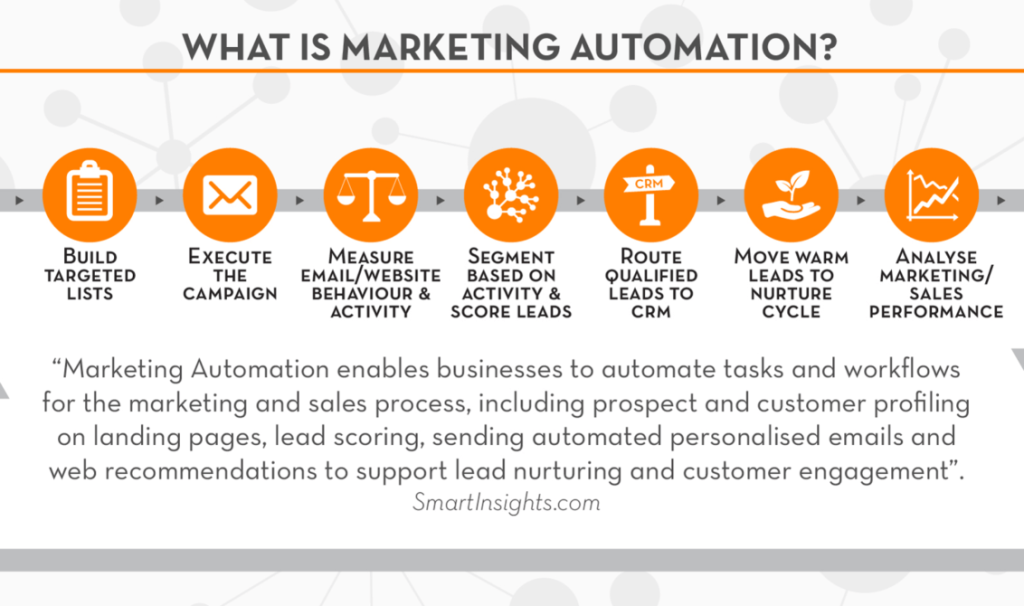
Knowledge of marketing automation tools and strategies can streamline marketing processes, saving time and resources while maximizing efficiency.
Marketing Automation is a technology-driven strategy that automates repetitive marketing tasks and workflows, allowing businesses to nurture leads, engage with customers, and manage campaigns more efficiently.
It involves using software and tools to automate processes like email marketing, social media posting, lead scoring, customer segmentation, and more. The main objectives of marketing automation are to streamline marketing efforts, save time and resources, and deliver personalized and timely communication to the right audience.
Key features and benefits of marketing automation include:
- Lead Nurturing: Marketing automation enables businesses to automatically send targeted and relevant content to leads based on their behaviour, interests, and stage in the buying journey, ultimately guiding them towards a purchase.
- Automated Campaigns: Businesses can create and schedule automated campaigns that trigger specific actions based on predefined conditions or customer interactions.
- Scalability: Marketing automation allows companies to handle a large number of leads and customers effectively without compromising personalization and engagement.
- Data Insights: By tracking and analyzing customer interactions, marketing automation provides valuable insights into campaign performance and customer behaviour, enabling marketers to make data-driven decisions.
- Lead Scoring: Marketing automation tools can assign scores to leads based on their engagement and behavior, helping sales teams prioritize and focus on the most promising prospects.
- Personalization: Through automation, businesses can deliver personalized messages and content to individual customers, increasing the chances of conversion and customer loyalty.
- Improved Efficiency: Marketing automation streamlines repetitive tasks, reducing manual efforts and allowing marketing teams to concentrate on creative and strategic aspects of campaigns.
- Multi-Channel Marketing: Automation enables coordinated marketing efforts across various channels, ensuring consistent messaging and customer experience.
Marketing automation platforms integrate with customer relationship management (CRM) systems and other marketing tools, creating a unified ecosystem to manage customer interactions effectively. When used wisely, marketing automation can significantly improve customer engagement, drive conversions, and enhance overall marketing performance. However, it’s essential to strike a balance between automation and maintaining a human touch to avoid coming across as impersonal or spammy to customers.

If a company wants to increase its online sales, it needs to know how to set up and optimize an e-commerce website and a sales funnel.
Successful online retail operations necessitate both ecommerce and sales funnels. An online sales funnel is a predetermined path that shoppers follow from their first encounter with a brand to the final purchase.
Awareness, interest, consideration, and conversion are some of the typical stages of the conversion funnel. In the awareness phase of the customer life cycle, adverts and other forms of marketing help introduce potential buyers to a product or brand. As they move down the sales funnel, they demonstrate increasing levels of interest and consideration for the product, which ultimately results in a purchase being made.
Content marketing, social media marketing, email marketing, and targeted ads are just a few of the many marketing strategies used by ecommerce businesses to increase website traffic and nurture leads.
Improving conversion rates and revenue in an online store can be achieved by analyzing data, locating bottlenecks, and implementing fixes. The user experience, customer satisfaction, and overall sales performance of an online store can all benefit from a well-structured e-commerce funnel.
If you want to become an expert in digital marketing, you should consider taking courses online, attending workshops and conferences, and even doing internships or side projects to gain practical experience. Gaining these competencies and keeping abreast of relevant developments in the field will make you an asset to companies competing in the modern digital economy.
Building a Successful Sales Strategy, Prospecting, Qualifying, and Closing Deals!
Despite rapid technological advancements, the foundational business skill of sales remains critically essential. High-income sales skills involve more than mere persuasion; they include understanding consumer behaviour, building long-term relationships, and crafting mutually beneficial deals.
These sales skills could translate into a lucrative business in various ways. You could offer sales training services, work as a high-value sales consultant, or launch a product or service and use your skills to drive its market success. High-calibre sales professionals are known to generate impressive incomes, especially when operating in industries like technology, pharmaceuticals, real estate, and finance.
Conclusion
Having high earning potential thanks to your skill set is crucial if you want to succeed in today’s fastpaced, technology centric world. These skills can serve as a springboard for a prosperous business venture that brings in lots of money and sets you on the path to financial independence. The true challenge is in developing these abilities, maintaining flexibility, and actively seeking new information. Your abilities are your most valuable asset, so it makes sense to make deliberate investments in enhancing them. These highincome skills can greatly increase your earning potential, whether you are just starting out in your career or are considering a career change. These abilities not only pave the way to well paying employment opportunities, but also to starting one’s own business. The key to mastering any subject is to put in the time and effort, maintain an open mind, and never stop learning. Keep in mind that your abilities are your greatest asset, and invest wisely.